
Blog
Smart AI Coolers vs. Traditional Vending Machines: Pros, Cons and When Each Makes Sense


AI smart coolers are the newest thing in unattended retail, and they get a lot of attention. That doesn’t make traditional vending machines outdated. Each one is the better choice in different places. This guide lays out the real pros and cons of both, backed by industry data, so you can match the machine to the location instead of chasing a trend.
How each one works
A traditional vending machine keeps products behind glass or a panel. The customer pays with cash, card or phone, picks a selection, and the machine drops that one item from a spiral coil or elevator. Nothing is released until it’s paid for.
An AI smart cooler works like an unlocked fridge. The customer taps a card or phone, the door unlocks, they take what they want and close the door. Cameras see which products left the shelf and charge the card automatically.
 Traditional: refurbished Dixie Narco Bev Max |  Smart cooler: Vendera Core |
What the numbers say
- Most vending sales are already cashless. Cantaloupe’s 2026 Micropayment Trends Report found that 78% of food and beverage vending sales in 2025 were cashless, and that tap-to-pay made up 85% of cashless vending sales.
- Cash still matters. About 22% of vending sales are still paid in cash, with an average cash purchase of $1.57. The FDIC’s 2023 survey found 4.2% of U.S. households (about 5.6 million) have no bank account, and two-thirds of those rely entirely on cash.
- Smart formats sell bigger baskets. The same Cantaloupe report put the 2025 average sale at $2.01 for vending machines, $3.02 for micro markets and $4.49 for smart stores, because customers can grab several items and fresh food at once.
AI smart coolers: pros and cons
Pros
- Bigger sales per visit. Customers can take several items in one transaction.
- Sells almost anything that fits on a shelf. Salads, sandwiches, multi-packs and odd-shaped items that won’t fit a coil.
- Fewer moving parts. No coils, motors or keypads to jam.
- Remote management. Live sales, stock levels and remote price changes from an app, plus video of each transaction to settle disputes.
- Modern look. A clean, lit, fridge-style display fits offices, gyms and upscale lobbies.

Cons
- Cashless only. No cash means no sale for customers who only carry cash. Some states and cities also require businesses to accept cash. New York’s 2025 cash-acceptance law, for example, does not explicitly exempt vending machines. Check local rules before placing a cashless-only machine.
- Ongoing platform fees. Smart coolers run on software and cellular data. For example, the Vendera Core costs $40 a month plus 5.85% of each card sale and $0.22 per debit card sale.
- Best in secure or semi-private spaces. The door only opens after a card is approved, but industry guides still recommend “closed-loop” locations such as offices, apartment buildings and gyms, where customers are regulars.
- Indoor use. Smart coolers are designed for indoor, climate-controlled locations.
- Depends on connectivity and software. If the cellular signal or the platform goes down, the machine can’t sell.
- Fresh food brings extra work. Selling perishable food usually needs a local health permit, tight rotation and expiration tracking.
Traditional vending machines: pros and cons
Pros
- Takes cash and cards. Add a card reader and you serve every customer, including cash-only buyers.
- Works in public, high-traffic spots. Products are released one at a time only after payment, so traditional machines are the safer choice for lobbies, laundromats, warehouses, schools, transit and other places open to the public.
- Lower upfront cost. Most of our refurbished snack and drink machines sell for roughly $1,400 to $3,300.
- No required subscription. Cashless readers and telemetry are optional add-ons with their own fees, so a cash-only machine can run with no monthly software cost.
- Built to last and easy to repair. Name-brand machines are mechanical and well known, parts are widely available, and a refurbished machine can go back to work for years.
- Proven for snacks and drinks. For shelf-stable chips, candy, soda and water, a traditional machine is a simple, reliable workhorse.
 Refurbished Crane National 167 snack machine | 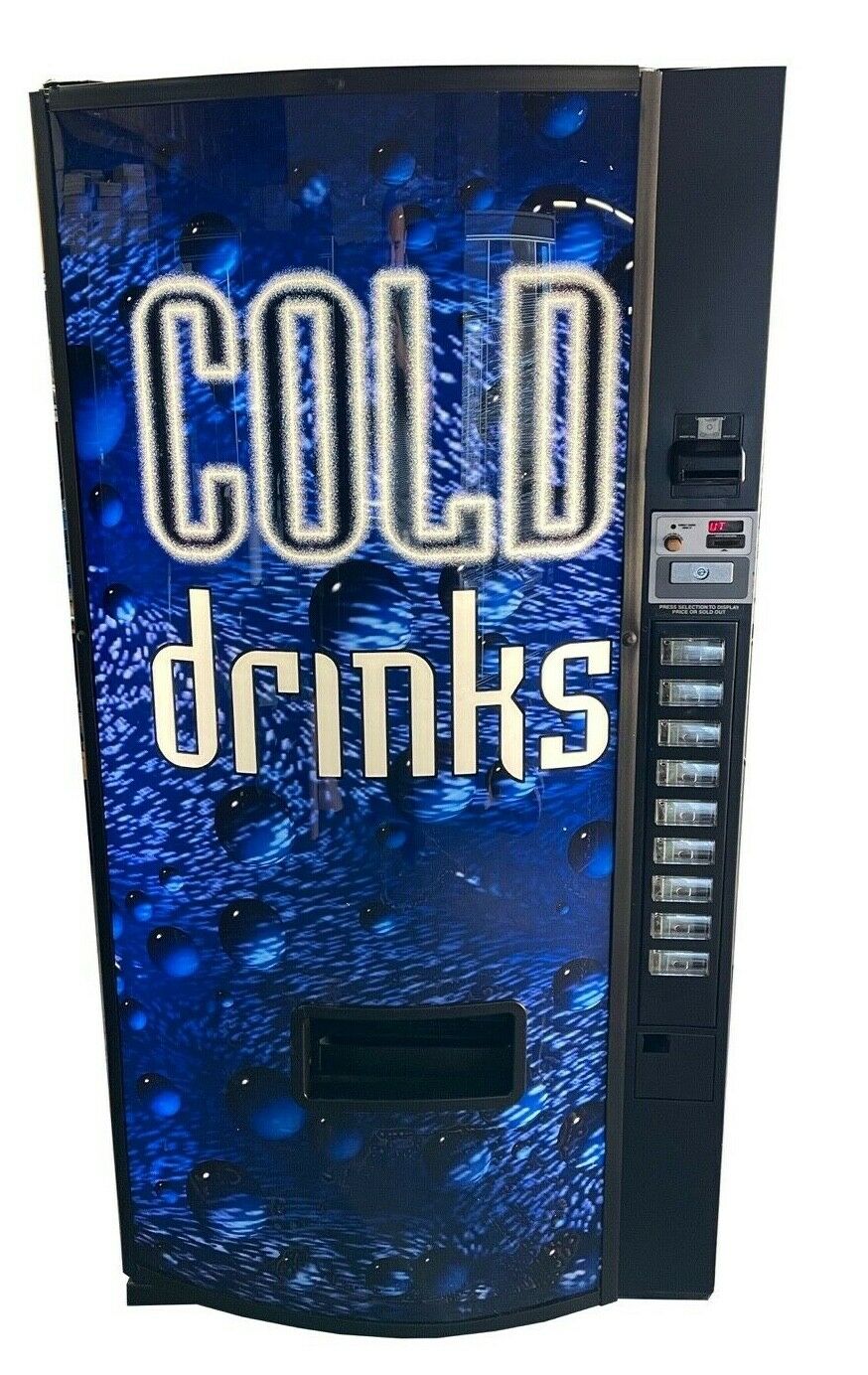 Refurbished Dixie Narco 501E drink machine |
Cons
- Smaller average sale. Usually one item per purchase.
- Limited product shapes. Coils and trays work best with standard snack and drink packaging.
- More moving parts. Coils, motors, bill validators and coin mechanisms need occasional service.
- Handling cash takes time. Collecting, counting and depositing cash adds route time, unless you run the machine card-only.
Side-by-side comparison
| Traditional vending | AI smart cooler | |
|---|---|---|
| Payment | Cash, card and phone (with reader) | Card and phone only |
| Best locations | Public and high-traffic, indoor or sheltered | Offices, gyms, apartments, hotels, hospitals |
| Products | Snacks, candy, cans, bottles | Drinks, snacks, fresh food, odd shapes |
| Average sale (2025) | About $2.01 | About $4.49 (smart stores) |
| Upfront cost at Westway | About $1,400 to $3,300 refurbished | $3,695 new (Vendera Core) |
| Monthly software | Optional | Required ($40/mo + 5.85% per sale + $0.22 per debit sale on the Core) |
| Maintenance | Mechanical; parts widely available | Few moving parts; relies on software and cellular |
When each one makes sense
Choose a traditional vending machine when:
- The location is open to the public, such as a lobby, laundromat, auto shop, school, warehouse or transit area.
- Many customers pay with cash.
- You’re selling standard snacks and drinks.
- You want the lowest upfront cost and no required monthly fees.
- Cell signal is weak or unreliable.
Choose an AI smart cooler when:
- The location is secure or semi-private with regular users, such as an office break room, gym, apartment lobby, hotel or hospital staff area.
- Nearly everyone pays by card or phone.
- You want to sell fresh food, bigger items or premium products.
- The site can support a higher average sale that covers the monthly fees.
Or run both
Many operators do. A traditional snack machine next to a smart cooler lets cash customers buy snacks while card users grab drinks and fresh food, and it gives the location more choice.
Shop both at Westway Vending
Vendera Core |  Vendera Arctic freezer |
- Refurbished drink machines, snack machines and combo machines
- Vendera Core AI Smart Cooler, in stock and running at our Rancho Cucamonga shop
- Vendera Arctic AI Smart Freezer (pre-order, estimated December delivery)
- See all Smart AI Coolers
Not sure which fits your location? Contact us or call or text (909) 923-9914. We sell and service both, so we’ll recommend what actually fits the site.
Frequently asked questions
Can a smart cooler take cash?
Most AI smart coolers, including Vendera models, are cashless only. They accept cards, Apple Pay, Google Pay and chip.
Are smart coolers easy to steal from?
The door stays locked until a card is approved, and cameras record each transaction. They still work best in locations with regular users rather than fully public spots.
Can I add a card reader to a traditional machine?
Yes. Most modern machines accept a cashless reader, so you can take both cash and cards.
Which makes more money?
It depends on the location. Smart formats average bigger sales, but they cost more upfront and carry monthly fees. A well-placed traditional machine in a busy public spot can out-earn a smart cooler in the wrong location.
Sources
- Cantaloupe: Micropayment Trends Report 2026
- FDIC: 2023 National Survey of Unbanked and Underbanked Households
- Cantaloupe: Smart coolers, the new alternative to vending machines
- Holland & Knight: New York State enacts cash acceptance law (Dec. 2025)
- Micromarket vs. smart fridge vs. vending: security guide